Best Educational Tour Places in Jaipur for School Students
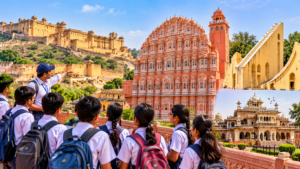
Educational Places in Jaipur offer school students an exciting opportunity to explore India’s history, science, architecture, and cultural heritage beyond the classroom. Known as the Pink City, Jaipur features magnificent forts, historic palaces, fascinating museums, and the world-famous Jantar Mantar observatory. These destinations make learning more interactive by helping students connect classroom lessons with real-world experiences. From discovering Rajput history at Amber Fort to exploring astronomy at Jantar Mantar, the best educational tour places in Jaipur provide valuable learning opportunities for students of different age groups. A well-planned Jaipur educational tour can develop curiosity, improve observation skills, and deepen students’ understanding of India’s rich heritage.
Why Choose Jaipur for an Educational Tour?
Jaipur is an excellent choice for school excursions because it combines historical significance with scientific learning and cultural experiences. Students can explore centuries-old monuments, learn about the planning of a historic city, and understand how traditional architecture reflects the political and social life of its time.
The variety of educational places in Jaipur makes it possible to plan meaningful visits for students from different age groups. Younger learners can discover stories about kings, forts, and palaces, while older students can study architectural styles, astronomical instruments, conservation, and urban planning in greater detail.
An educational trip also provides opportunities for teamwork, group discussions, photography-based assignments, and heritage observation activities. These experiences help students connect theoretical knowledge with practical learning while enjoying a change from their regular classroom environment.
1. Amber Fort – Explore Rajasthan’s Royal History
Amber Fort, also known as Amer Fort, is one of the most remarkable historical landmarks near Jaipur. Located on a hill overlooking Maota Lake, the fort is known for its grand courtyards, imposing gateways, decorative halls, and combination of Rajput and Mughal architectural influences.
For students, Amber Fort provides an opportunity to understand the history of Rajasthan’s royal families, the defensive features of historic forts, and the architectural techniques used in earlier centuries. Teachers can explain the strategic importance of hilltop locations, the role of fortifications, and the significance of courtyards and water systems.
During a visit, students can observe the intricate mirror work of Sheesh Mahal and the artistic details found throughout the complex. Amber Fort is one of the most interesting historical places in Jaipur for students because it turns lessons about medieval Indian history and architecture into a visual learning experience.
Learning focus: Rajput history, fort architecture, historical defence systems, and traditional art.
2. Jantar Mantar – Discover the Science of Astronomy
Jantar Mantar is one of the most valuable destinations for science-based learning in Jaipur. This UNESCO World Heritage Site contains a collection of large astronomical instruments built under the direction of Maharaja Sawai Jai Singh II in the eighteenth century.
The observatory demonstrates how astronomers used carefully designed instruments to observe celestial bodies, measure time, and study astronomical phenomena before modern electronic equipment became available. Students can learn about sundials, the apparent movement of the Sun, and the historical development of astronomy.
Among the educational places in Jaipur, Jantar Mantar stands out for connecting mathematics, physics, and astronomy with India’s scientific heritage. Teachers can prepare simple observation worksheets to encourage students to identify instruments, understand their purposes, and discuss how measurements were made.
This visit is particularly useful for middle-school and senior-school students studying astronomy, geometry, and the history of science.
Learning focus: Astronomy, mathematics, time measurement, scientific observation, and India’s scientific achievements.
3. City Palace – Understand Jaipur’s Royal Heritage
Situated in the heart of the old city, City Palace offers insight into Jaipur’s royal history, artistic traditions, and architectural development. Its courtyards, gateways, halls, and museum collections reflect the cultural influences and craftsmanship associated with the royal court.
Students can observe traditional costumes, decorative objects, historical artefacts, and examples of royal architecture, depending on the areas open to visitors. The complex also helps explain the relationship between rulers, administration, art, and cultural patronage.
A visit to City Palace can complement history and social science lessons by showing how royal households functioned and how artistic traditions developed over time. It is also a useful destination for discussions about the preservation of historic buildings and cultural objects.
Including City Palace in a list of educational places to visit in Jaipur gives students a chance to explore the city’s heritage through both its buildings and its collections.
Learning focus: Royal history, art, cultural heritage, architecture, and heritage conservation.
4. Hawa Mahal – Learn About Historic Architecture
Hawa Mahal is among Jaipur’s most recognisable monuments, famous for its distinctive pink façade and numerous small windows. Built in 1799, the palace is associated with the architectural traditions of the Rajput period.
Its honeycomb-like design provides an excellent starting point for discussing ventilation, natural light, climate-responsive architecture, and the use of screens in historic buildings. Students can examine how design choices reflected the social customs and environmental conditions of the period.
Teachers can encourage students to compare traditional buildings with modern structures and identify ways in which architecture responds to weather, privacy, and cultural needs.
Hawa Mahal is one of the most engaging educational tour places in Jaipur for visual learning, architectural observation, and heritage photography. Even a short visit can provide material for classroom assignments on geometry, design, and historical lifestyles.
Learning focus: Architecture, ventilation, design principles, social history, and cultural traditions.
5. Albert Hall Museum – Explore Art, History, and Culture
Albert Hall Museum, located in Ram Niwas Garden, is an important museum in Jaipur that introduces visitors to a wide range of artistic and historical collections. Depending on the galleries available during the visit, students may encounter paintings, sculptures, decorative arts, textiles, and other historical objects.
Museums help learners understand how objects preserve information about past societies. By observing artefacts, students can explore the materials, techniques, artistic styles, and cultural practices associated with different periods.
Teachers can organise a simple museum activity in which students select an object, describe its appearance, and explain what it might reveal about the people who created or used it. This encourages careful observation, interpretation, and evidence-based thinking.
For schools searching for museums in Jaipur for students, Albert Hall Museum is a strong option for combining history, art appreciation, and cultural education in one visit.
Learning focus: Museum studies, art history, archaeology, traditional crafts, and cultural preservation.
6. Nahargarh Fort – Study Geography and Fort Planning
Nahargarh Fort stands on the Aravalli hills overlooking Jaipur. Its elevated location makes it an interesting destination for students studying geography, topography, settlement patterns, and the historical defence of cities.
During a visit, students can observe the relationship between the surrounding landscape and the fort’s position. Teachers can explain how elevation, visibility, terrain, and access routes influenced the placement of defensive structures.
The fort can also support discussions about the development of Jaipur, its surrounding hills, and the importance of preserving historical structures. Students should follow designated visitor routes and remain within permitted areas, particularly around elevated viewpoints.
Among the educational places in Jaipur, Nahargarh Fort offers a valuable opportunity to combine historical learning with geographical observation.
Learning focus: Physical geography, topography, fort planning, historical defence, and environmental awareness.
7. Jaigarh Fort – Discover Military Engineering
Jaigarh Fort is known for its defensive architecture, massive walls, gateways, and historical military installations. Located near Amber Fort, it helps students explore how engineering and military planning contributed to the protection of royal settlements.
Students can observe defensive walls, strategic viewpoints, and the layout of the fort complex. Teachers can introduce concepts such as structural strength, material selection, terrain advantages, and the relationship between engineering and historical warfare.
The fort’s association with traditional artillery also provides an opportunity to discuss the development of military technology in a historical context. Such discussions should focus on history and engineering rather than the use of weapons.
Jaigarh Fort can be included in a broader heritage excursion alongside Amber Fort, subject to available time, access conditions, and the school’s learning objectives.
Learning focus: Engineering, defensive architecture, military history, construction techniques, and strategic planning.
8. Birla Planetarium – Introduce Students to Space Science
The Birla Planetarium at the M. P. Birla Science Centre in Jaipur has traditionally offered astronomy-related educational experiences. Schools should confirm current public access, show schedules, and student-group arrangements before including it in their plans.
Where suitable programmes are available, a planetarium visit can introduce students to the solar system, stars, constellations, planetary motion, and broader concepts in space science. Visual presentations can make abstract astronomical ideas easier to understand.
Teachers can prepare students before the visit by discussing the difference between stars and planets, the phases of the Moon, or the relationship between Earth’s rotation and day and night. Follow-up activities may include a short quiz or a diagram-based assignment.
For schools exploring science and astronomy places in Jaipur, a verified planetarium programme can complement a visit to Jantar Mantar and create a broader learning experience.
Learning focus: Space science, planetary motion, astronomy, and scientific curiosity.
9. Jaipur’s Traditional Craft Areas – Learn About Local Art and Skills
Jaipur is renowned for its traditional crafts, including block printing, blue pottery, jewellery-making, textiles, and decorative arts. A carefully arranged visit to a suitable craft workshop or demonstration can introduce students to the skills and knowledge passed down through generations.
Students can learn about raw materials, design development, production methods, and the role of craftsmanship in local livelihoods. They may also explore how traditional businesses respond to changing markets while preserving cultural identity.
Schools should select age-appropriate, reputable workshops that welcome student groups and confirm whether demonstrations or supervised hands-on activities are available. Students should respect artisans’ working spaces and follow safety instructions.
Such experiences add a practical dimension to educational places in Jaipur by helping learners appreciate the connection between culture, creativity, entrepreneurship, and sustainable livelihoods.
Learning focus: Art and design, traditional craftsmanship, entrepreneurship, local culture, and vocational awareness.
10. Patrika Gate – Explore Colour, Design, and Cultural Identity
Patrika Gate is a visually striking architectural landmark known for its colourful painted surfaces and decorative details. Its design provides an accessible introduction to visual storytelling and the representation of Rajasthan’s regional identity through art.
Students can observe patterns, colour combinations, motifs, and decorative elements inspired by the state’s culture and heritage. Teachers can use the visit as the basis for art assignments, design sketches, or short presentations on regional traditions.
As with any public attraction, schools should check access arrangements, visitor conditions, and photography rules before planning group activities. The visit is best treated as a supplementary cultural stop rather than a replacement for a museum or heritage site with extensive educational interpretation.
Learning focus: Visual arts, colour theory, cultural identity, design, and observation skills.
How to Plan a Successful Jaipur Educational Tour for School Students
A successful school excursion begins with clear learning objectives. Teachers should select destinations that match students’ age groups, curriculum requirements, available time, and physical needs. A tour focused on history may prioritise Amber Fort, City Palace, and Hawa Mahal, while a science-focused programme can combine Jantar Mantar with a verified astronomy experience.
When selecting educational places in Jaipur, schools should also consider travel time between attractions, weather conditions, entry arrangements, meal breaks, and the time required for students to explore each location. Visiting too many monuments in one day can reduce the educational value of the trip.
Useful planning steps include:
- Define learning outcomes: Decide which historical, scientific, cultural, or geographical concepts students should understand.
- Create a realistic schedule: Allow time for transfers, guided explanations, rest breaks, and meals.
- Arrange supervision: Assign teachers or accompanying adults to student groups and establish clear headcounts.
- Prepare learning activities: Use worksheets, observation tasks, group discussions, and short presentations.
- Check access requirements: Confirm opening hours, entry fees, group- booking rules, photography restrictions, and current visitor facilities.
- Plan for safety and comfort: Carry essential contact information, drinking water, first-aid supplies, and appropriate sun protection.
Schools planning a structured excursion can explore [Jaipur educational tour packages for school students] to compare suitable travel arrangements and develop a programme aligned with their educational objectives.
Benefits of Visiting Educational Places in Jaipur
Educational excursions provide opportunities for learning that extend beyond textbooks. Visiting historical monuments allows students to observe architectural features directly, while museums help them understand how artefacts provide evidence about the past.
Science-focused destinations encourage learners to ask questions, make observations, and connect theoretical concepts with practical examples. Cultural workshops, meanwhile, help students appreciate traditional skills and the people who preserve them.
Exploring educational places in Jaipur can also support personal development. Travelling in groups encourages communication, cooperation, independence, and respect for different perspectives. Students learn to follow schedules, participate in shared responsibilities, and engage thoughtfully with the places they visit.
The educational value of a trip depends on preparation and reflection. Teachers can reinforce the experience through classroom discussions, travel journals, quizzes, presentations, or projects completed after returning to school.
Follow Us & Travel With Us
Get travel inspiration, exciting destinations, tour updates & special offers.
Conclusion
Jaipur offers a rich variety of destinations for schools seeking meaningful learning experiences outside the classroom. From Amber Fort and City Palace to Jantar Mantar, Albert Hall Museum, and traditional craft workshops, the city brings together history, architecture, science, art, and cultural heritage.
Choosing the right educational places in Jaipur helps schools design an excursion that is both enjoyable and academically relevant. By setting clear learning objectives, arranging suitable supervision, and planning activities around each destination, teachers can make the visit more engaging for students.
Shikhar Educational Tours can help schools explore suitable educational travel options and plan a Jaipur excursion around their students’ interests and learning needs. Visit the [Jaipur educational tour package page] to enquire about arrangements for your school group and begin planning a memorable educational experience.
Frequently Asked Questions
1. What are the best educational places in Jaipur for school students?
Some of the leading options include Amber Fort, Jantar Mantar, City Palace, Hawa Mahal, Albert Hall Museum, Nahargarh Fort, and Jaigarh Fort. Traditional craft workshops can also provide valuable cultural and practical learning opportunities.
2. Why is Jaipur suitable for a school educational tour?
Jaipur combines historical monuments, museums, astronomical heritage, traditional crafts, and distinctive architecture. These attractions help students connect classroom subjects such as history, science, geography, and art with real-world observations.
3. Which places in Jaipur are best for science students?
Jantar Mantar is particularly valuable for studying astronomy, time measurement, mathematics, and scientific observation. Schools may also consider a planetarium programme after confirming current access and availability.
4. Can schools cover Jaipur’s educational attractions in one day?
A one-day trip can cover a limited selection of attractions, but visiting every major site is not practical. Schools should prioritise destinations according to their learning objectives and allow sufficient time for travel, breaks, and guided activities.
5. What is the best time to plan a Jaipur school trip?
The cooler months, generally October to March, are often more comfortable for sightseeing and outdoor learning. Schools should still check local weather forecasts, monument schedules, and any seasonal restrictions before departure.
6. How can schools organise a Jaipur educational tour?
Schools should define their learning goals, estimate the group size and budget, select suitable attractions, arrange transportation and accommodation if required, and establish supervision and safety procedures. Working with an experienced educational tour operator can help coordinate the practical arrangements.