Best Astronomy Places in India for School Educational Trips
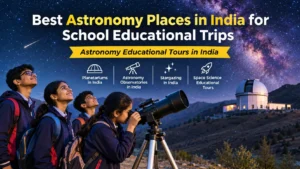
The universe has always fascinated young minds. From planets and stars to distant galaxies and black holes, astronomy opens up endless opportunities for students to explore science beyond traditional classrooms. Astronomy Educational Tours in India allow schools to combine academic learning with practical experiences through visits to planetariums, astronomical observatories, science centres and destinations known for their dark night skies.
India offers several fascinating destinations where students can discover how astronomers study celestial objects, understand telescope technology and learn about space exploration. These educational experiences encourage curiosity, scientific observation and an interest in STEM subjects.
For schools planning meaningful science-based excursions, choosing the right astronomy destination can transform theoretical knowledge into an engaging learning experience.
Why Choose Astronomy Educational Tours in India for School Students?
Astronomy connects several subjects, including physics, mathematics, geography, environmental science and technology. It helps students understand scientific concepts by observing how the universe works.
Participating in astronomy-based school trips offers several educational benefits:
- Practical science learning: Students can understand astronomical concepts through telescope demonstrations, planetarium shows and interactive exhibitions.
- STEM education: Learning about satellites, planets, space missions and astronomical instruments encourages interest in science and technology.
- Scientific observation: Students develop observation skills by identifying constellations, understanding planetary movements and studying the night sky.
- Career awareness: Educational visits introduce students to careers in astronomy, astrophysics, aerospace engineering and space research.
- Environmental awareness: Dark-sky experiences help students understand light pollution and the importance of protecting natural night skies.
These experiences make astronomy a valuable addition to school educational programmes, particularly for students interested in science, innovation and space exploration.
Best Astronomy Places in India for School Educational Trips
From professional research observatories to interactive planetariums, there are several destinations where students can explore astronomy and space science.
Here are some of the most interesting places to consider for school educational visits.
1. Hanle, Ladakh – Explore India’s Dark Sky Reserve
Hanle in Ladakh is one of India’s most fascinating destinations for astronomy enthusiasts. Located in the Changthang region, this remote Himalayan village is recognised for its exceptionally dark skies and astronomical research facilities.
The destination is home to the Indian Astronomical Observatory, operated by the Indian Institute of Astrophysics. The observatory houses the Himalayan Chandra Telescope, which is used for professional astronomical research.
Hanle is also home to India’s first Dark Sky Reserve, established in December 2022. The initiative promotes dark-sky conservation, astronomy education and responsible astro-tourism.
Students visiting the region can learn about:
- The importance of dark skies for astronomical observations.
- How professional telescopes help scientists study distant celestial objects.
- Constellations, planets and the Milky Way.
- Light pollution and dark-sky conservation.
- Astronomy through guided telescope sessions with local Astronomy Ambassadors.
Hanle is an excellent destination for advanced Astronomy Educational Tours in India, particularly for senior school students. However, its high altitude, remote location and acclimatisation requirements mean that schools must plan visits carefully.
Visitor note: The professional research observatory has restricted access. Public stargazing experiences are arranged through local Astronomy Ambassadors using dedicated telescopes.
2. ARIES Observatory, Nainital – Discover the Science of Astronomy
The Aryabhatta Research Institute of Observational Sciences (ARIES), located at Manora Peak near Nainital, Uttarakhand, is an important destination for students interested in astronomy and astrophysics.
Its Science Centre introduces visitors to astronomical research through educational presentations, telescope demonstrations and interactive learning activities.
School groups can experience planetarium shows, explore astronomy exhibitions, observe sunspots through suitable equipment and participate in night-sky observation sessions, depending on weather conditions.
Educational highlights:
- Introduction to astronomical telescopes and their working principles.
- Understanding sunspots and solar observation.
- Exploring astronomy through planetarium presentations.
- Learning about astronomical research and scientific discoveries.
- Opportunities for interaction with scientists, subject to availability.
ARIES is particularly suitable for school groups looking to combine classroom science with practical demonstrations. Schools must apply in advance for educational visits.
3. Kodaikanal Solar Observatory, Tamil Nadu – Understand the Science of the Sun
Established in 1899, the Kodaikanal Solar Observatory is one of India’s historic astronomical research centres. Located in the beautiful Palani Hills of Tamil Nadu, it has contributed to solar observations for more than a century.
Operated by the Indian Institute of Astrophysics, the observatory provides students with an opportunity to understand the Sun and its influence on Earth.
The Astronomy Museum on the campus features educational displays, historical instruments, telescope models and information about solar research.
Educational highlights:
- Introduction to solar physics and solar observation.
- Understanding sunspots and solar activity.
- Exploring historical astronomical instruments.
- Learning how scientists study the Sun.
- Understanding the importance of long-term astronomical observations.
For schools planning Space Science Educational Tours, Kodaikanal offers an interesting combination of scientific learning, research heritage and practical exposure.
Advance applications are required for educational group visits. The observatory also provides guided visits according to its published visitor arrangements.
4. Nehru Planetarium, New Delhi – Experience the Universe Through Digital Astronomy
Located at Teen Murti House in New Delhi, Nehru Planetarium is a popular destination for students interested in astronomy and space science.
Its full-dome digital theatre presents astronomical concepts through immersive visual shows, helping students understand planets, stars, galaxies and other celestial phenomena.
The planetarium also promotes scientific curiosity through educational programmes, workshops and student activities.
Educational highlights:
- Understanding the solar system and planetary movements.
- Learning about stars, galaxies and the universe.
- Exploring India’s astronomical heritage.
- Participating in astronomy-related workshops and activities.
- Experiencing immersive 2D and 3D planetarium presentations.
Among the well-known Planetariums in India, Nehru Planetarium is a convenient option for schools planning educational visits in Delhi. It can also be included in a broader science and technology educational programme.
5. Vainu Bappu Observatory, Kavalur – Explore Professional Astronomy Research
Located in the Javadi Hills of Tamil Nadu, the Vainu Bappu Observatory is an important astronomical research facility operated by the Indian Institute of Astrophysics.
The observatory houses the 2.3-metre Vainu Bappu Telescope, which is used for optical astronomical observations.
Students visiting the facility can learn how professional astronomers use advanced instruments to study stars, galaxies and other celestial objects.
Educational highlights:
- Introduction to optical astronomy.
- Understanding large telescope technology.
- Learning about astronomical research methods.
- Exploring the relationship between physics and space science.
- Developing awareness of careers in astrophysics.
The observatory is especially interesting for senior students studying physics and science. Public visits are available through its outreach programme, currently scheduled on Saturdays, subject to institutional arrangements and weather conditions.
6. Devasthal Observatory, Uttarakhand – Learn About Advanced Telescope Technology
Devasthal, located in Uttarakhand, is an important centre for modern astronomical research associated with ARIES.
It houses advanced scientific facilities, including the 3.6-metre Devasthal Optical Telescope and the 4-metre International Liquid Mirror Telescope.
A visit to the Devasthal Science Centre can introduce students to modern astronomical instruments and the role of technology in scientific research.
Educational highlights:
- Understanding large optical telescopes.
- Learning about modern astronomical research.
- Exploring the relationship between physics and space science.
- Understanding how scientists study distant celestial objects.
- Developing interest in scientific innovation.
- Devasthal is particularly interesting for senior students studying science and technology.
Educational visits to the Science Centre require prior permission. Access to the research telescopes themselves is not permitted for visitors.
Best Places for Stargazing in India for School Students
Apart from observatories and planetariums, India has several destinations where students can experience the night sky away from city lights.
Stargazing in India provides an opportunity to introduce students to constellations, the Milky Way, planets and other visible celestial objects. Guided observations can make these experiences more meaningful by connecting what students see with scientific explanations.
Some destinations worth considering include:
Hanle, Ladakh: Known for its exceptionally dark skies, Hanle offers excellent opportunities for guided stargazing and astronomy-focused experiences.
Spiti Valley, Himachal Pradesh: Its remote Himalayan landscapes and relatively low light pollution in suitable locations make Spiti an interesting destination for night-sky observation.
Kausani, Uttarakhand: Surrounded by Himalayan landscapes, Kausani can provide opportunities for guided sky observation under favourable weather conditions.
Rann of Kutch, Gujarat: Its open landscapes can provide suitable settings for organised stargazing activities when skies and weather conditions are favourable.
Schools planning Astronomy Educational Tours in India should consider seasonal weather, cloud cover, moon phases, visibility and the availability of trained astronomy guides before selecting a destination.
What Students Can Learn During Space Science Educational Tours
The main objective of Space Science Educational Tours is to help students connect scientific theories with real-world applications.
Schools can include several engaging activities in their educational programmes.
1. Telescope Observation
Students can learn how telescopes collect light and help astronomers observe distant celestial objects. Guided demonstrations can introduce different types of telescopes and their applications in astronomical research.
2. Understanding the Solar System
Interactive sessions can help students understand planetary movements, Earth’s rotation, lunar phases and the relationship between the Sun and other celestial bodies.
3. Identifying Stars and Constellations
During guided night-sky sessions, students can learn to identify prominent constellations and understand how astronomers map the night sky.
4. Learning About India’s Space Missions
Discussions about India’s space exploration programmes, satellites, Chandrayaan and other scientific missions can introduce students to the engineering and technology behind space exploration.
5. Astronomy Workshops and Science Activities
Schools can organise astronomy quizzes, model-making activities, science presentations and observation journals to encourage students to participate actively.
These activities make Astronomy Educational Tours in India more meaningful by encouraging students to ask questions, analyse observations and develop scientific thinking.
How to Plan Astronomy Educational Tours in India for Schools
Planning a successful astronomy trip requires more than selecting a destination. Schools should consider educational objectives, student age groups, travel arrangements and the availability of suitable learning facilities.
Here are some important factors to consider:
1. Select destinations according to the curriculum
Choose destinations that connect with subjects such as physics, geography, mathematics and environmental science. Planetariums are suitable for introductory learning, while observatories can provide deeper exposure to astronomical research.
2. Consider the age group of students
Younger students may benefit from interactive planetarium shows and basic astronomy demonstrations. Senior students can explore telescope technology, astrophysics and scientific research.
3. Check institutional permissions
Many observatories operate primarily as research facilities. Schools should obtain advance permission and confirm available activities before including them in their itineraries.
4. Choose the right season
Clear skies are important for outdoor astronomical observations. Weather conditions, cloud cover and moon phases should be considered while scheduling stargazing sessions.
5. Prioritise student safety
High-altitude destinations such as Hanle require additional preparation and acclimatisation. Schools should assess medical support, transport, accommodation and supervision arrangements.
A well-planned programme can turn astronomy into an engaging learning experience beyond the classroom.
Plan an Educational Journey Beyond the Classroom with Shikhar Educational Tours
At Shikhar Educational Tours, we believe that meaningful learning extends beyond textbooks and classrooms. Educational journeys provide students with opportunities to discover new subjects, interact with experts and understand the practical applications of academic concepts.
Our educational travel programmes aim to combine exploration, experiential learning and student engagement.
Schools interested in Astronomy Educational Tours in India can consider planning visits to planetariums, observatories, science centres and destinations offering guided stargazing experiences.
Whether your school is looking for a short science educational visit or a multi-day space science learning programme, the right itinerary can make astronomy an exciting subject for students.
Follow Us & Learn With Us
Get travel inspiration, exciting destinations, tour updates & special offers.
Frequently Asked Questions (FAQs)
1. What are the best astronomy places in India for school students?
Hanle, ARIES Nainital, Kodaikanal Solar Observatory, Nehru Planetarium and Vainu Bappu Observatory are notable destinations for astronomy-related educational visits.
2. Which is the best place for stargazing in India?
Hanle in Ladakh is among India’s leading dark-sky destinations, offering excellent opportunities for guided stargazing.
3. Can schools organise astronomy educational tours in India?
Yes. Schools can organise visits to planetariums, observatories and astronomy-focused destinations, subject to booking requirements and institutional permissions.
4. What can students learn during an astronomy educational trip?
Students can learn about planets, stars, constellations, telescopes, solar systems, space missions and astronomical research.
5. Which planetariums in India are suitable for school trips?
Nehru Planetarium in Delhi and other major planetariums offer educational presentations and astronomy experiences suitable for school groups.
6. What is the best time to organise a school stargazing trip?
The best time depends on the destination. Generally, periods with clearer skies and favourable weather are preferable. Schools should also consider moon phases and local seasonal conditions.