Best Educational Tour Destinations in Delhi for School Students
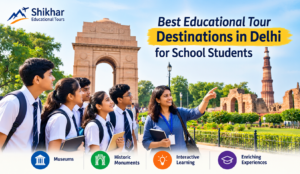
Delhi is more than India’s capital; it is a living classroom where students can explore history, science, culture, architecture, and environmental conservation. From interactive science exhibitions to magnificent historical monuments, the city offers countless opportunities to connect classroom lessons with real-world experiences. An educational tour in Delhi for students helps young learners discover new ideas, develop curiosity, and understand their subjects beyond textbooks.
For schools planning meaningful excursions, Delhi offers destinations suitable for different age groups and academic interests. Whether teachers want to organise a history-focused visit, a science exploration, or a cultural learning experience, the right destination can make the trip both enjoyable and educational.
In this guide, we explore the best places for school trips, their educational benefits, and practical tips for planning a successful visit.
Why Choose Delhi for School Educational Trips?
Delhi combines centuries of history with modern scientific institutions, museums, memorials, and cultural landmarks. This diversity makes it an excellent destination for schools looking to organise enriching learning experiences.
Here are some key benefits of educational tours in Delhi:
- Practical learning: Students can observe historical artefacts, architectural designs, scientific displays, and wildlife firsthand.
- Better understanding: Real-world experiences help learners connect academic concepts with everyday life.
- Cultural awareness: Visits to museums and monuments introduce students to India’s diverse traditions and heritage.
- Social development: Group activities encourage teamwork, communication, responsibility, and cooperation.
- Increased curiosity: Exploring new places motivates students to ask questions and learn independently.
A well-planned educational tour in Delhi for students can complement classroom teaching while giving children memorable experiences outside school.
8 Best Educational Places in Delhi for Students
1. National Science Centre – Discover the World of Science
The National Science Centre is one of the most valuable destinations for students interested in science, technology, and innovation. Located near Pragati Maidan, it features interactive exhibitions and science-based attractions that encourage exploration.
Students can discover scientific principles through practical demonstrations, displays, and educational shows. These experiences can make topics such as physics, biology, technology, and scientific reasoning easier to understand.
Best suited for: Middle and senior school students, particularly those studying science.
Learning outcomes: Scientific curiosity, observation, problem-solving, and critical thinking.
Internal linking suggestion: [Science Educational Tours for School Students]
2. National Rail Museum – Explore India’s Railway Heritage
The National Rail Museum in Chanakyapuri introduces students to the development of India’s railway network. Its collection of locomotives, railway coaches, and historical exhibits provides an engaging way to explore the history of transportation.
Teachers can connect the visit with lessons about engineering, industrial development, transport systems, and the role of railways in India’s economic growth.
The museum is also suitable for younger learners because its exhibits help explain how transportation has changed over time.
Best suited for: Primary, middle, and secondary school students.
Learning outcomes: Transport history, engineering awareness, technological development, and observation skills.
Internal linking suggestion: [One-Day Educational Trips for School Students]
3. National Museum – Discover India’s Cultural Heritage
The National Museum on Janpath is an excellent destination for students studying history, art, and culture. Its collections include archaeological objects, sculptures, paintings, and artefacts representing different periods of Indian history.
A museum visit can help students understand ancient civilisations, artistic traditions, historical discoveries, and cultural continuity. Teachers can prepare worksheets asking students to identify artefacts and explain what they reveal about past societies.
Schools should check current gallery availability and arrange group visits in advance. The museum also offers educational programmes for school students, subject to its booking requirements.
Best suited for: Middle and senior school students.
Learning outcomes: Historical awareness, cultural appreciation, research skills, and visual interpretation.
Internal linking suggestion: [Cultural and Heritage Educational Tours in India]
4. Humayun’s Tomb – Learn About Mughal Architecture
Humayun’s Tomb is a UNESCO World Heritage Site and an important example of Mughal architecture. Built in the sixteenth century, the monument combines Persian architectural influences with Indian craftsmanship.
Students can examine its symmetrical design, gardens, geometric patterns, and architectural features. History and art teachers can use the visit to explain the development of Mughal architecture and its influence on later monuments.
This destination also introduces learners to the importance of conserving historical structures for future generations.
Best suited for: Middle and senior school students.
Learning outcomes: Indian history, architecture, geometry, cultural heritage, and conservation awareness.
Internal linking suggestion: [Historical Educational Tours in India]
5. National Zoological Park – Understand Wildlife and Biodiversity
The National Zoological Park in Delhi offers an opportunity to introduce students to wildlife, biodiversity, and environmental responsibility.
During the visit, students can observe animals and discuss their habitats, food chains, adaptations, and conservation challenges. Teachers can prepare age-appropriate observation sheets to encourage children to record their findings and ask questions.
The experience can support lessons in biology and environmental studies while encouraging respect for wildlife.
Schools should follow the zoo’s visitor guidelines and ensure students observe animals responsibly without disturbing them.
Best suited for: Primary, middle, and secondary school students.
Learning outcomes: Biodiversity awareness, animal behaviour, environmental education, and responsible tourism.
Internal linking suggestion: [Nature and Wildlife Educational Tours for Students]
6. Gandhi Smriti – Understand India’s Freedom Movement
Gandhi Smriti is a meaningful destination for students learning about Mahatma Gandhi, India’s independence movement, and the principles of non-violence.
The memorial provides historical context for discussions about leadership, peaceful resistance, personal responsibility, and social change. Teachers can encourage students to reflect on how these values apply to everyday life and responsible citizenship.
A guided discussion before or after the visit can help students understand the historical significance of the independence movement.
Best suited for: Middle and senior school students.
Learning outcomes: Modern Indian history, civic responsibility, ethical values, and leadership.
Internal linking suggestion: [History and Heritage Tours for School Groups]
7. Pradhanmantri Sangrahalaya – Explore India’s Democratic Journey
Pradhanmantri Sangrahalaya, located in the Teen Murti area, introduces visitors to India’s prime ministers and the country’s political and developmental history.
The museum provides a useful setting for students to learn about governance, democracy, leadership, national development, and major events in independent India.
Teachers can connect the visit with civics and social science lessons by asking students to identify important milestones and discuss the responsibilities of democratic institutions.
Schools should check the latest booking procedures and visitor rules before arranging a group visit.
Best suited for: Middle and senior school students.
Learning outcomes: Civics, democratic awareness, political history, and leadership studies.
Internal linking suggestion: [Civics and Social Science Educational Tours]
8. Qutub Minar – Discover Medieval Indian History
Qutub Minar is another important destination for students interested in history and architecture. The monument and its surrounding archaeological complex provide insights into medieval Delhi, historical construction techniques, inscriptions, and architectural styles.
Students can study the monument’s design and discuss how historical structures provide evidence about the societies that created them.
A visit can also introduce learners to archaeology and the importance of protecting heritage sites from damage.
Best suited for: Middle and senior school students.
Learning outcomes: Medieval history, architecture, archaeology, and heritage preservation.
Internal linking suggestion: [Delhi Heritage Tours for School Students]
Educational Places to Visit in Delhi by Class Level
Choosing the right destination depends on students’ ages, interests, curriculum, and ability to engage with different exhibits.
| Class level | Recommended destinations | Learning focus |
|---|---|---|
| Classes 1–5 | National Rail Museum, National Zoological Park | Observation, transport, wildlife |
| Classes 6–8 | National Science Centre, Humayun’s Tomb, Qutub Minar | Science, architecture, history |
| Classes 9–12 | National Museum, Gandhi Smriti, Pradhanmantri Sangrahalaya | Heritage, civics, historical analysis |
These are general suggestions rather than fixed age restrictions. Teachers should assess each venue’s suitability and current visitor requirements before finalising the itinerary.
How to Plan School Educational Trips in Delhi
Planning is essential to ensure students enjoy a safe, organised, and educational experience. Schools arranging an educational tour in Delhi for students should consider the following steps.
1. Define learning objectives: Select destinations that complement the curriculum and establish what students should learn during the trip.
2. Choose suitable destinations: Consider students’ ages, travel time, accessibility, available facilities, and the duration of the visit.
3. Confirm bookings: Contact the venue beforehand to check group entry rules, guided tours, ticket prices, available facilities, and any restrictions.
4. Arrange reliable transport: Select suitable vehicles, confirm pick-up and drop-off arrangements, and allow enough time for traffic.
5. Establish safety procedures: Assign teacher responsibilities, maintain attendance records, share emergency contacts, and communicate clear behavioural guidelines.
6. Include learning activities: Use worksheets, observation tasks, group discussions, and short presentations to make the visit more interactive.
7. Review the experience: Ask students to prepare a report, poster, presentation, or reflection after returning to school.
Following these steps can help schools make an educational tour in Delhi for students more productive and enjoyable.
Choosing Educational Tour Packages in Delhi
Schools often prefer organised educational tour packages in Delhi when they need assistance with transportation, itinerary planning, scheduling, and group coordination.
Before selecting a package, schools should compare the services offered and confirm exactly what is included in the quoted price.
Consider these factors:
- Customised itineraries: The destinations should match the school’s learning objectives and students’ class levels.
- Transparent pricing: Check transport, entry tickets, meals, guide charges, taxes, and any additional costs.
- Safety arrangements: Confirm vehicle suitability, emergency procedures, supervision responsibilities, and relevant insurance arrangements.
- Time management: Choose an itinerary that allows sufficient time at each destination without rushing students.
- School coordination: Ensure the tour provider communicates clearly with teachers and the designated school coordinator.
A suitable educational tour in Delhi for students should balance academic value, comfort, safety, and affordability rather than simply covering as many attractions as possible.
Schools can contact an experienced educational tour organiser to discuss their preferred destinations, group size, travel dates, and learning objectives before requesting a customised itinerary.
Best Time to Organise a School Excursion in Delhi
October to March is generally a practical period for outdoor sightseeing in Delhi because temperatures are usually more comfortable than during the peak summer months. However, winter mornings can be foggy and cold, while air pollution can affect outdoor activities.
Schools should monitor local weather and air-quality advisories, especially when planning trips during winter. Indoor destinations such as museums and science centres may be preferable when outdoor conditions are unsuitable.
Advance planning is recommended during busy school excursion periods. Always verify the latest opening hours, closures, entry arrangements, and group booking policies directly with the relevant venue.
Frequently Asked Questions
1. What are the best educational tour destinations in Delhi for school students?
Popular choices include the National Science Centre, National Rail Museum, National Museum, Humayun’s Tomb, National Zoological Park, Gandhi Smriti, Pradhanmantri Sangrahalaya, and Qutub Minar. The best option depends on students’ ages and learning objectives.
2. Why should schools organise educational tours in Delhi?
Educational tours allow students to experience history, science, culture, and environmental studies beyond textbooks. They can also develop curiosity, observation, teamwork, and critical-thinking skills.
3. Which educational places in Delhi are suitable for primary school students?
The National Rail Museum and National Zoological Park can be engaging choices for younger students. Teachers should select age-appropriate activities and ensure suitable supervision throughout the trip.
4. Can schools organise a one-day educational tour in Delhi?
Yes. Schools can plan a one-day visit by choosing one or two nearby destinations and allowing sufficient time for travel, learning activities, breaks, and meals. The final itinerary should reflect traffic conditions and venue schedules.
5. What should schools check before booking educational tour packages in Delhi?
Schools should verify the itinerary, transport arrangements, total cost, entry tickets, group booking requirements, safety procedures, supervision responsibilities, and cancellation terms before confirming a package.
6. How can schools make educational trips more effective?
Teachers can prepare students before the visit, provide observation worksheets, organise small-group activities, and ask students to complete a reflection or project afterwards. These activities help connect the experience with classroom learning.
Follow Us & Travel With Us
Get travel inspiration, exciting destinations, tour updates & special offers.
Conclusion
Delhi offers a wide variety of destinations where students can explore scientific discoveries, historical monuments, cultural artefacts, wildlife, and democratic institutions. Selecting the right places and preparing meaningful activities can transform a school excursion into a valuable learning experience.
Whether your school is planning a science-focused visit, a heritage exploration, or a combination of educational attractions, thoughtful organisation is key to making the trip rewarding.
For schools seeking help with planning, Shikhar Educational Tours can be approached to discuss suitable destinations, group requirements, and itinerary options. A well-organised educational tour in Delhi for students can inspire curiosity, strengthen classroom learning, and create lasting memories for young learners.