Japan Educational Tour for Students: Learn, Explore & Experience Japan
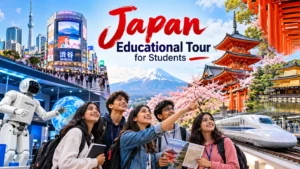 A Japan educational tour for students offers much more than sightseeing. It gives young learners the opportunity to experience advanced technology, centuries-old traditions, disciplined public systems, world-class transportation and a culture that values education, respect and innovation.
From exploring futuristic science museums in Tokyo to travelling aboard the famous Shinkansen and discovering the cultural heritage of Kyoto and Nara, Japan creates a learning environment where students can connect classroom subjects with real-world experiences.
For schools planning an international educational journey, Japan is an excellent destination for combining STEM learning, cultural exposure, history, technology and personal development in one well-structured program.
Why Choose a Japan Educational Tour for Students?
Japan is one of the world’s most fascinating destinations for experiential education because traditional culture and advanced technology exist side by side.
Students can spend one day learning about robotics and artificial intelligence and the next exploring ancient temples, shrines and traditional neighbourhoods.
A well-planned Japan educational tour for students can introduce learners to science, history, geography, technology, sustainability, transportation, architecture and cultural studies while encouraging them to become more independent and globally aware.
The journey also helps students understand how another society approaches cleanliness, punctuality, public behaviour, infrastructure and community responsibility.
Educational Benefits of a Student Tour to Japan
An international educational tour becomes valuable when students are encouraged to observe, participate and reflect rather than simply visit attractions.
Explore more –>
Exposure to Science and Technology
Japan has played an important role in the development of robotics, electronics, transportation and industrial technology.
Visits to science museums, innovation centres and technology-focused attractions can help students understand topics such as robotics, artificial intelligence, space science, engineering and automation.
These experiences are particularly useful for students interested in STEM subjects.
Understanding Japanese Culture and Heritage
Japan’s cultural heritage gives students an opportunity to understand traditions that have developed over centuries.
Shrines, temples, traditional streets, local customs and historic cities help students learn how Japan has preserved its cultural identity while becoming one of the world’s most technologically developed nations.
Developing Global Awareness
Travelling internationally exposes students to different languages, lifestyles, food habits and social systems.
A Japan educational tour for students encourages learners to become more open-minded and comfortable interacting with people from different backgrounds.
Learning Independence and Responsibility
International travel naturally encourages students to manage time, follow schedules, work within a group and become more responsible for their belongings and behaviour.
These practical skills are valuable far beyond the classroom.
Tokyo: Technology, Innovation and Modern Japan
Tokyo is often the first major learning destination on a student tour of Japan.
It provides an extraordinary introduction to modern Japanese society, transportation and technology.
Miraikan – National Museum of Emerging Science and Innovation
Miraikan is one of the most relevant attractions for an educational group interested in science and technology.
Students can explore exhibitions related to robotics, space, artificial intelligence, environmental science and emerging technologies.
The museum encourages young visitors to think about how scientific innovation may influence the future.
Shibuya Crossing
Shibuya Crossing is not only one of Tokyo’s most recognizable landmarks but also an interesting example of urban planning and pedestrian management.
Students can observe how one of the world’s busiest cities efficiently manages large numbers of pedestrians and vehicles.
Tokyo Skytree
A visit to Tokyo Skytree gives students an opportunity to understand the scale and geography of Tokyo.
From the observation areas, students can identify neighbourhoods, transportation networks and the vast urban landscape of the Japanese capital.
Asakusa
Asakusa provides a striking contrast to futuristic Tokyo.
Its traditional streets and historic atmosphere help students understand how heritage continues to remain part of daily life in one of the world’s most modern cities.
Japanese School or University Visit
One of the most meaningful elements of a Japan educational tour for students can be interaction with a Japanese school or university.
Depending on availability and program arrangements, students may get an opportunity to meet local learners, observe educational practices and participate in cultural exchange activities.
Such interaction helps students compare educational systems, communication styles and everyday school life.
It can also encourage confidence, curiosity and cross-cultural friendships.
Experience the Shinkansen Bullet Train
Travelling on the Shinkansen is an educational experience in itself.
Japan’s high-speed railway system is known worldwide for efficiency, safety and punctuality.
Students can observe how transportation technology connects major Japanese cities and supports economic activity.
For students interested in engineering, infrastructure or urban development, travelling by bullet train makes these subjects much easier to understand.
Kyoto: Discover Japan’s Cultural Heritage
After experiencing the modern side of Japan, Kyoto introduces students to the country’s historical and spiritual traditions.
The city is known for temples, shrines, traditional architecture and beautifully preserved cultural sites.
Fushimi Inari Shrine
Fushimi Inari is famous for its thousands of red torii gates.
Students can learn about Shinto traditions and understand the religious and cultural significance of shrines in Japanese society.
Kinkaku-ji
Kinkaku-ji, also known as the Golden Pavilion, is one of Kyoto’s best-known heritage sites.
The architecture and surrounding landscape provide an opportunity to discuss Japanese aesthetics, history and the relationship between built structures and nature.
Nara: History, Heritage and Wildlife
Nara was one of Japan’s ancient capitals and remains an important destination for understanding the country’s early history.
Nara Park
Nara Park is famous for its freely roaming deer, which have cultural and religious significance in the region.
The visit allows students to explore the relationship between wildlife, tourism and cultural traditions.
Todai-ji Temple
Todai-ji is one of Japan’s most significant Buddhist temples and is home to an enormous bronze Buddha statue.
Students visiting the temple can learn about Buddhism, traditional architecture and the historical development of Japanese society.
Osaka: Science, Culture and Entertainment
Osaka offers another perspective on Japanese city life and can combine educational visits with recreational experiences.
Osaka Science Museum
The Osaka Science Museum is an excellent addition to a student-focused itinerary.
Interactive exhibitions related to electricity, physics, energy and scientific principles help students connect theoretical classroom concepts with hands-on learning.
Osaka Aquarium
An aquarium visit can provide learning opportunities related to marine ecosystems, biodiversity and environmental conservation.
Students can observe different marine species while understanding the importance of protecting ocean habitats.
Dotonbori
Dotonbori introduces students to Osaka’s energetic urban culture, food scene and commercial environment.
A guided walk through the area can become an interesting observation exercise in tourism, branding, retail and Japanese popular culture.
Educational Themes Covered During the Tour
A well-designed Japan student program can connect with several school subjects.
Students may explore concepts related to:
- Science and technology
- Robotics and artificial intelligence
- Engineering
- Japanese history
- World cultures
- Geography
- Environmental awareness
- Transportation systems
- Urban planning
- Architecture
- International communication
- Social responsibility
This multidisciplinary approach makes a Japan educational tour for students suitable for schools looking for meaningful international exposure.
What Students Can Learn from Japanese Society
Some of the most valuable lessons in Japan come from observing ordinary daily life.
Students often notice the punctuality of public transport, cleanliness of public areas and organized behaviour at railway stations and attractions.
They can also observe the importance placed on respect, responsibility and consideration for others.
These experiences encourage students to think about how individual behaviour contributes to the functioning of a community.
Who Can Join a Japan Educational Tour?
Japan educational programs can be designed for middle-school and senior-school students depending on the objectives of the school.
The itinerary can be particularly valuable for students studying subjects such as:
- Science
- Mathematics
- Robotics
- Computer Science
- Geography
- History
- Social Studies
- Design
- Engineering-related subjects
Schools can adapt the program according to student age, curriculum requirements and learning objectives.
Best Time for a Japan Student Educational Tour
Japan can be visited throughout the year, although spring and autumn are particularly popular for educational groups.
Spring generally offers pleasant weather and the possibility of seeing cherry blossoms, while autumn is known for comfortable temperatures and colourful landscapes.
Schools should consider academic calendars, examination schedules, weather conditions and expected visitor numbers while selecting travel dates.
How Schools Can Prepare Students for Japan
Preparation plays an important role in making an educational journey successful.
Before departure, schools can conduct an orientation session covering Japanese customs, local etiquette, basic language phrases, public transportation rules and cultural expectations.
Students can also be divided into small research groups and assigned topics such as Japanese technology, history, transport or sustainability.
During the tour, they can record observations and later prepare presentations or reports after returning home.
This transforms the journey into a structured learning project rather than simply a holiday.
Why Japan Is Ideal for Experiential Learning
Japan allows students to experience several contrasting themes within a single journey.
They can see cutting-edge robotics in Tokyo, ride one of the world’s most advanced railway systems, explore centuries-old shrines in Kyoto and study historical monuments in Nara.
This combination of old and new makes Japan particularly valuable for experiential education.
Students do not simply read about innovation, heritage or infrastructure—they experience them in real environments.
Plan a Japan Educational Tour for Your School
A thoughtfully designed Japan educational tour for students can become one of the most memorable learning experiences of a student’s school years.
By combining STEM education, cultural interaction, historical exploration and international travel, the program can encourage curiosity, confidence and a broader understanding of the world.
Schools can customize the journey according to student age, academic interests, group size and available travel duration.
Whether the focus is robotics, science, culture, history or global exposure, Japan provides countless opportunities to take education beyond the classroom.
Follow Us & Travel With Us
Get travel inspiration, exciting destinations, tour updates & special offers.
Frequently Asked Questions
Is Japan suitable for an educational tour for school students?
Yes. Japan offers excellent learning opportunities in science, technology, history, culture, transportation and environmental awareness, making it highly suitable for school educational tours.
What can students learn during a Japan educational tour?
Students can learn about robotics, artificial intelligence, Japanese culture, history, public transportation, urban planning, architecture, social discipline and international communication.
Which cities are best for a Japan student educational tour?
Tokyo, Kyoto, Nara and Osaka are among the most suitable destinations because together they provide a balance of technology, science, history, culture and interactive learning experiences.
Can a Japan educational tour include a school visit?
Yes, school or university interaction may be incorporated depending on institutional availability, advance arrangements and the structure of the program.
How many days are ideal for a Japan educational tour?
Around seven to ten days generally provides enough time to experience major educational attractions across destinations such as Tokyo, Kyoto, Nara and Osaka without making the schedule excessively rushed.
Is Japan good for STEM-focused student groups?
Yes. Japan is particularly suitable for STEM groups because students can explore robotics, artificial intelligence, engineering, transportation technology and interactive science museums.
Conclusion over Japan educational tour for students
A Japan educational tour for students is an opportunity to transform travel into meaningful education.
Japan’s combination of advanced technology, efficient infrastructure, cultural heritage and disciplined social systems gives students an environment where learning happens naturally through observation and experience.
From robotics and AI in Tokyo to historic temples in Kyoto, high-speed rail journeys and science museums in Osaka, every stage of the journey can contribute to a student’s academic knowledge and personal development.
For schools seeking to prepare students for an increasingly interconnected world, Japan offers a powerful combination of learning, exploration and global exposure.