Why Jaipur and Ranthambore Make the Perfect Educational Tour for Students
Educational travel has evolved far beyond traditional sightseeing. Today, schools seek experiences that combine academics, culture, adventure, and experiential learning to create meaningful educational outcomes for students. A Jaipur Ranthambore Educational Tour offers exactly this combination by bringing together the royal heritage of Rajasthan and the fascinating biodiversity of one of India’s most celebrated wildlife reserves
From magnificent forts and astronomical observatories to tiger safaris and conservation education, this journey transforms textbooks into real-life experiences. Students not only witness history and wildlife firsthand but also develop observation skills, cultural understanding, teamwork, and environmental awareness.
For schools looking to provide learning beyond classrooms, a Jaipur Ranthambore Educational Trip stands out as one of the most enriching educational travel experiences in India.
Why Choose a Jaipur Ranthambore Educational Tour?
A Jaipur Ranthambore Educational Tour combines multiple disciplines into a single educational journey. History, geography, environmental science, architecture, astronomy, wildlife conservation, and culture all become part of the learning experience.
Jaipur introduces students to Rajasthan’s royal legacy, scientific achievements, and architectural brilliance, while Ranthambore exposes them to India’s conservation efforts and rich biodiversity.
This combination makes the Jaipur Ranthambore Educational Trip suitable for students across middle school and senior secondary levels, especially those studying history, environmental science, geography, social studies, and biology.
The balance between structured learning and exploration keeps students engaged throughout the journey.
Educational Tour in Rajasthan: Learning Beyond the Classroom
An Educational tour in Rajasthan offers students opportunities that traditional classroom teaching often cannot provide. Rajasthan’s history, architecture, culture, and ecology create an ideal setting for immersive education.
During a Jaipur Ranthambore Educational Tour, students can:
- Experience heritage sites instead of merely reading about them.
- Understand wildlife conservation through direct observation.
- Learn through interaction and guided interpretation.
- Develop leadership and communication skills.
- Build teamwork through group activities and shared experiences.
- Gain exposure to regional cultures and traditions.
Such experiences leave a lasting impression and often inspire future academic interests and career choices.
School Trip to Jaipur: Exploring the Pink City
A School trip to Jaipur introduces students to one of India’s most historically significant cities. Popularly known as the Pink City, Jaipur is a living museum of architecture, astronomy, engineering, and urban planning.
The city’s well-preserved heritage allows students to understand the vision of Maharaja Sawai Jai Singh II, who designed Jaipur as one of India’s earliest planned cities.
During a Jaipur Ranthambore Educational Tour, Jaipur becomes an open-air classroom where every monument tells a story.
Historical Learning Opportunities
Students can explore:
- Amber Fort and its remarkable Rajput architecture.
- City Palace and its royal collections.
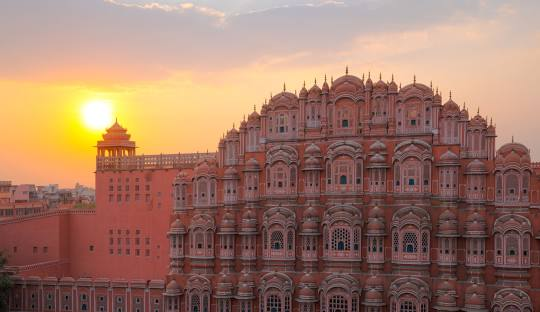
- Hawa Mahal and its unique façade design.
- Jal Mahal situated amidst Man Sagar Lake.
- Albert Hall Museum and its historical artifacts.
- Jantar Mantar, a UNESCO World Heritage Site dedicated to astronomy.
These visits help students connect historical events with physical locations, making history more engaging and memorable.
Jaipur Educational Trip: Understanding Heritage and Architecture
A Jaipur educational trip offers an excellent opportunity for interdisciplinary learning.
Students studying architecture can observe:
- Traditional Rajput construction techniques.
- Defensive fortification systems.
- Water conservation methods used centuries ago.
- Urban planning principles incorporated into Jaipur city.
Students interested in mathematics and astronomy find Jantar Mantar particularly fascinating because it demonstrates how ancient astronomers achieved extraordinary accuracy using massive observational instruments.
The educational value of these sites makes the Jaipur Ranthambore Educational Tour highly relevant to modern school curricula.
Jaipur City Educational Tour: A Living History Lesson
A Jaipur city educational tour allows students to immerse themselves in Rajasthan’s culture and heritage.
Beyond monuments, students gain insights into:
- Traditional crafts and handicrafts.
- Local cuisine and culinary traditions.
- Textile production and block printing.
- Folk art and cultural performances.
- Traditional marketplaces and commerce.
Exposure to local communities encourages cultural appreciation and broadens students’ perspectives.
This cultural immersion adds another dimension to the Jaipur Ranthambore Educational Trip, making it far more than a sightseeing excursion.
Ranthambore Educational Tour: Learning Through Wildlife
After exploring Rajasthan’s heritage, students move into a completely different learning environment during the Ranthambore educational tour component of the journey.
Located in southeastern Rajasthan, Ranthambore is one of India’s premier wildlife destinations and an important tiger conservation landscape.
Students gain firsthand exposure to:
- Wildlife habitats.
- Predator-prey relationships.
- Ecosystem dynamics.
- Biodiversity conservation.
- Human-wildlife coexistence.
These concepts become easier to understand when experienced in a natural environment rather than through textbooks alone.
The wildlife component makes the Jaipur Ranthambore Educational Tour a truly multidisciplinary educational experience.
Ranthambore National Park Educational Visit: Conservation in Action
A Ranthambore National Park educational visit offers students an opportunity to witness conservation efforts in practice.
The park is home to:
- Bengal Tigers
- Leopards
- Sloth Bears
- Hyenas
- Sambar Deer
- Nilgai
- Marsh Crocodiles
- Numerous bird species
Guided safaris allow students to understand tracking methods, wildlife behaviour, habitat management, and ecological balance.
Discussions on Project Tiger and conservation policies help students appreciate the importance of protecting endangered species.
For biology and environmental science students, this is often the highlight of a Jaipur Ranthambore Educational Tour.
Experiential Learning Tour: Why Experience Matters
An Experiential learning tour creates stronger educational outcomes because students learn through direct participation and observation.
Research consistently shows that students retain information more effectively when they actively engage with their environment.
A Jaipur Ranthambore Educational Tour promotes experiential learning through:
- Monument exploration.
- Wildlife observation.
- Group discussions.
- Reflection activities.
- Guided interpretation sessions.
- Photography and field documentation.
Students become participants in the learning process rather than passive observers.
This approach improves critical thinking, problem-solving abilities, and curiosity.
Things to Do During a Jaipur Ranthambore Educational Tour
There are numerous educational activities that schools can include during the journey.
Heritage Exploration
Students can:
- Explore forts and palaces.
- Study architectural styles.
- Learn about Rajput history.
- Visit museums and galleries.
Astronomy Learning
Jaipur’s Jantar Mantar offers:
- Practical astronomy education.
- Understanding of ancient scientific instruments.
- Lessons in time measurement and celestial observations.
Wildlife Safari
Students can:
- Observe animal behaviour.
- Learn species identification.
- Understand ecosystems.
- Explore conservation practices.
Cultural Activities
Schools may include:
- Folk performances.
- Craft workshops.
- Local market visits.
- Traditional art demonstrations.
These activities further enhance the educational value of a Jaipur Ranthambore Educational Tour.
Best Time to Go for a Jaipur Ranthambore Educational Tour
The ideal period for a Jaipur Ranthambore Educational Tour is from October to March.
During these months:
- Temperatures remain comfortable.
- Wildlife sightings improve in Ranthambore.
- Outdoor monument visits become more enjoyable.
- Student activities can be conducted comfortably.
Winter months are particularly suitable for school groups because the pleasant weather supports both sightseeing and safari experiences.
Schools planning a Jaipur Ranthambore Educational Tour should ideally make bookings well in advance during peak travel seasons.
How to Reach Jaipur and Ranthambore
Accessibility is one of the reasons why a Jaipur Ranthambore Educational Tour is popular among schools across India.
Reaching Jaipur
Jaipur is well connected through:
- Domestic and international flights.
- Major railway routes.
- National highways.
Students travelling from Delhi can reach Jaipur comfortably by road or train within a few hours.
Reaching Ranthambore
Ranthambore is accessible via:
- Sawai Madhopur Railway Station.
- Road connectivity from Jaipur.
- Private coaches for educational groups.
The journey from Jaipur to Ranthambore typically takes around three to four hours by road.
Educational Benefits for Students
The benefits of a Jaipur Ranthambore Educational Tour extend beyond academics.
Students develop:
- Leadership skills.
- Independence.
- Team collaboration.
- Communication abilities.
- Environmental awareness.
- Cultural sensitivity.
Educational tours also encourage adaptability and confidence as students interact with new environments and experiences.
These life skills remain valuable long after the journey concludes.
Who Should Join a Jaipur Ranthambore Educational Tour?
A Jaipur Ranthambore Educational Tour is particularly beneficial for:
- Middle school students.
- Senior secondary students.
- Geography students.
- Biology students.
- History students.
- Environmental science students.
Teachers can also integrate the experience into classroom projects, presentations, and research assignments after the tour.
Why Schools Continue to Choose Jaipur and Ranthambore
Schools increasingly recognise that educational travel enhances classroom learning.
The combination of history, architecture, science, wildlife, and culture makes the Jaipur Ranthambore Educational Trip one of India’s most complete educational experiences.
Few destinations offer such a balanced mix of curriculum relevance and student engagement.
Whether students are studying the evolution of cities, the achievements of ancient astronomers, or the importance of biodiversity conservation, this journey provides practical context that textbooks alone cannot deliver.
Visit Us : Instagram | Facebook
Final Thoughts
A Jaipur Ranthambore Educational Tour is much more than a school excursion. It is an opportunity to transform learning into an adventure filled with discovery, curiosity, and inspiration.
From the majestic forts of Jaipur to the wilderness of Ranthambore, students encounter lessons in history, architecture, astronomy, conservation, and culture at every step of the journey.
For schools seeking an educational program that combines academic value with unforgettable experiences, a Jaipur Ranthambore Educational Tour offers the perfect balance of heritage, wildlife, and experiential learning.
By blending classroom concepts with real-world experiences, this journey creates memories and knowledge that students carry with them for years to come.