Amritsar Educational Tour: History, Heritage and Cultural Learning
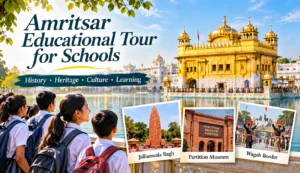
Explore Amritsar’s history, heritage and cultural learning through educational tours.
An educational tour is one of the most meaningful ways to help students connect classroom lessons with the world around them. From the history of India’s freedom movement to the richness of Sikh heritage and the traditions of Punjab, Amritsar offers a learning experience that combines knowledge, reflection and cultural discovery. An Amritsar educational tour for schools gives students the opportunity to explore important historical landmarks, understand the values of courage and service, and experience the region’s vibrant identity.
Located in the heart of Punjab, Amritsar is known for the Golden Temple, Jallianwala Bagh, the Partition Museum and the patriotic atmosphere of the Wagah-Attari Border. Each destination introduces students to a different chapter of India’s past and present. With thoughtful planning and teacher-led discussions, an Amritsar educational tour for schools can become a memorable extension of the school curriculum.
Why Choose an Amritsar Educational Tour for Schools?
Amritsar brings together history, architecture, culture, geography and civic learning in one destination. Students can observe historic places, listen to stories connected with India’s freedom struggle and learn about the traditions that shape everyday life in Punjab.
A well-planned Amritsar educational tour for schools supports learning beyond textbooks in several ways:
- Historical understanding: Students explore important events and places associated with Sikh history and India’s independence movement.
- Cultural awareness: Visits to religious and heritage sites introduce learners to customs, traditions and shared community values.
- Experiential learning: Seeing monuments and museums in person can make classroom topics easier to understand and remember.
- Social learning: Group travel encourages cooperation, responsibility, time management and respect for different perspectives.
- Observation and enquiry: Students can record details, ask questions and connect what they see with subjects such as history, art and geography.
For schools looking to make history and culture more engaging, Amritsar is a destination where each visit can lead to meaningful discussion.
Educational Tour in Amritsar: Places Every Student Should Explore
The city has several sites that can be included in a school itinerary. The selection should consider students’ age groups, available time, accessibility and the learning objectives of the trip.
1. Golden Temple: A Lesson in Faith, Service and Architecture
The Golden Temple, also known as Sri Harmandir Sahib, is one of the most significant spiritual sites in Sikhism. Its serene surroundings, sacred pool and distinctive architecture offer students an opportunity to understand the history and values of the Sikh faith.
A visit can introduce students to the principles of equality, humility, compassion and selfless service. The langar, or community kitchen, is especially meaningful for young learners. It serves meals to visitors regardless of background and demonstrates how community participation can put equality into practice.
During the visit, students should be briefed about the site’s customs, including covering their heads, removing footwear and maintaining respectful behaviour. The Golden Temple educational visit can become a valuable lesson in cultural sensitivity and shared humanity.
2. Jallianwala Bagh: Understanding India’s Freedom Struggle
Jallianwala Bagh is a key site in the history of India’s independence movement. On 13 April 1919, British troops under Brigadier-General Reginald Dyer opened fire on a gathering of people in the enclosed garden. The massacre became a turning point in the freedom struggle and deeply affected the national movement.
A visit helps students understand the human cost of colonial rule and the importance of civil rights, freedom and peaceful protest. Teachers can explain the historical context before the visit and encourage students to reflect on how the event shaped public opinion and the independence movement.
For learners studying modern Indian history, a Jallianwala Bagh school trip makes an important chapter more immediate and meaningful. It is an essential stop on an Amritsar educational tour for schools focused on India’s history.
3. Partition Museum: Stories of Migration and Resilience
The Partition Museum documents the human experiences of the 1947 Partition of India. Through personal accounts, photographs, objects, documents and oral histories, it introduces visitors to the upheaval experienced by families who were displaced during the division of the subcontinent.
The museum provides an opportunity to discuss migration, identity, community, loss and resilience. It can help students understand that major historical events affect ordinary people and families in deeply personal ways.
Teachers should consider the age and emotional readiness of their students when planning this visit. A guided discussion afterwards can help learners process the stories respectfully and understand the importance of peace and empathy.
4. Wagah-Attari Border: Patriotism and National Identity
The Wagah-Attari Border, near Amritsar, is known for its daily Beating Retreat ceremony conducted by the border security forces of India and Pakistan. The ceremony includes coordinated drills, flag-lowering activities and enthusiastic participation from spectators.
For students, the experience can open conversations about national identity, international borders, diplomacy and the role of security forces. Teachers can explain the historical background of Partition and the significance of the India-Pakistan border.
The ceremony is popular and can attract large crowds. Schools should check the latest entry arrangements, timings and security instructions before visiting, and ensure students remain with their group throughout.
Historical Places in Amritsar for Students: Learning Beyond Textbooks
An educational visit becomes more effective when students are encouraged to observe, question and reflect rather than simply move from one attraction to another. Amritsar’s historical places provide opportunities to connect classroom topics with real locations and personal stories.
For example, students can compare the architecture and purpose of religious and public spaces, create a timeline of important events, or write reflections after visiting a museum. They can also explore how historical events influenced the city’s identity and the wider story of Punjab.
An Amritsar educational tour for schools can support subjects such as history, social science, civics, geography, art and cultural studies. Teachers may prepare worksheets or simple group activities to help students retain what they learn.
Amritsar Heritage Tour for Students: Discovering Punjab’s Culture
Amritsar is not only a city of historical landmarks; it is also a place where Punjabi culture can be experienced through language, food, music, craft and everyday community life.
Students can learn about traditional Punjabi attire, folk music and dance forms such as Bhangra and Giddha, and the role of agriculture in the region’s economy. Local food traditions can also introduce them to the relationship between geography, climate and cuisine.
A heritage-focused programme should encourage respectful interaction and avoid treating local customs as performances alone. Students can be invited to notice how traditions are preserved, adapted and shared across generations. This cultural perspective makes an Amritsar educational tour for schools relevant to lessons about diversity and India’s regional identities.
Learning Outcomes of an Amritsar School Trip
A school trip should have clear learning outcomes that connect each destination with the students’ curriculum and age group. After the visit, students may be able to:
- Describe key events associated with the Jallianwala Bagh massacre and the freedom movement.
- Explain the importance of the Golden Temple and the values of equality and service represented by langar.
- Identify the effects of Partition on individuals, families and communities.
- Discuss the significance of borders and national identity in the context of the Wagah-Attari ceremony.
- Recognise elements of Punjab’s cultural heritage, including music, food and traditions.
- Demonstrate teamwork, discipline, curiosity and respect during group travel.
These outcomes can be strengthened through short presentations, travel journals, quizzes, classroom discussions or creative assignments after returning to school.
How to Plan an Amritsar Educational Tour for Schools
Good planning helps make the experience safe, organised and educational. Before finalising the itinerary, schools should identify the age group, number of participants, duration of the trip and topics they want students to explore.
Consider these practical points:
- Set learning objectives: Decide whether the main focus is Indian history, Sikh heritage, culture, citizenship or a combination of subjects.
- Plan a realistic itinerary: Allow sufficient time at each site and avoid scheduling too many visits in one day.
- Arrange suitable transport and accommodation: Choose reliable travel arrangements and accommodation appropriate for school groups.
- Provide supervision: Assign teachers or authorised tour staff to student groups and establish clear headcounts and meeting points.
- Share visitor guidelines: Explain dress codes, respectful conduct, photography rules and security procedures before each visit.
- Prepare students: Introduce key historical events and locations in the classroom before departure.
- Check current information: Confirm museum opening days, entry requirements, ceremony schedules and local advisories close to the travel date.
Working with an experienced educational tour organiser can help schools coordinate transport, accommodation, meals, site visits and on-ground support. A structured Amritsar educational tour for schools should balance learning, comfort, safety and enough time for students to reflect on what they experience.
Why Amritsar Is a Meaningful Destination for School Groups
Few destinations bring together so many important themes in a compact and accessible city. Amritsar allows students to explore the freedom struggle, understand the impact of Partition, learn about Sikh traditions and observe the living culture of Punjab.
The city also encourages important conversations about equality, service, courage, peace and coexistence. These are not only historical ideas; they are values students can relate to their own lives and communities.
An Amritsar educational tour for schools can turn lessons into first-hand experiences and help young learners develop a deeper appreciation of India’s diverse heritage. With suitable preparation and thoughtful guidance, the journey can remain meaningful long after students return to the classroom.
Plan Your Amritsar Educational Tour with Shikhar Educational Tours
At Shikhar Educational Tours, we believe travel can make learning more engaging, practical and memorable. Our educational tours are designed to help schools take students beyond the classroom through carefully planned journeys and meaningful destination experiences.
If your school is planning an Amritsar educational tour for schools, connect with our team to discuss your preferred dates, group size, travel requirements and learning objectives. We can help you plan an itinerary that brings together history, heritage and cultural learning in a well-organised school trip.
Visit https://shikhareducationaltours.com/ to explore educational travel opportunities or get in touch with our team to plan your next learning journey.
Frequently Asked Questions
1. Why is Amritsar a good destination for school educational tours?
Amritsar offers important historical sites, museums, religious heritage and cultural experiences that support classroom learning.
2. Which places should students visit in Amritsar?
Key places include the Golden Temple, Jallianwala Bagh, Partition Museum and Wagah-Attari Border.
3. What can students learn at Jallianwala Bagh?
Students can learn about the 1919 massacre, British colonial rule and the history of India’s freedom movement.
4. Is Amritsar suitable for a school group trip?
Yes. With age-appropriate planning, reliable transport, supervision and clear visitor guidelines, Amritsar can be suitable for school groups.
5. How many days are needed for an Amritsar educational tour?
A two- to three-day visit can cover the major heritage and historical sites, depending on the school’s travel schedule and learning objectives.